Cleaning Business Leads and How to Turn Them Into Clients
Cleaning business leads come from three places. Some are earned, through your Google profile, reviews and referrals. Some are bought, through ads and quote marketplaces. Some are made, through your own outreach to homes and businesses. Getting more of them matters less than most owners think, because a large share of leads are lost after they arrive.
The leads that become clients are the ones answered quickly, quoted clearly and followed up at least twice. So a lead plan has two halves, the sources that bring inquiries in and the habits that turn them into booked cleans.
What counts as a lead for a cleaning business
A lead is any person or business that has shown interest in hiring you. That covers a phone call, a text, a message through your Google profile, a website form, a quote request on a marketplace, or a neighbor who asks for your number.
Not every lead is worth the same effort. A qualified lead is one that fits your business. They are in your service area, they want a service you offer, and what they expect to pay is within reach of your price. Sorting leads early saves hours of quoting jobs you would never take.
Four questions, asked politely in the first reply, sort most leads in a minute.
- What is the address or neighborhood?
- Is this a regular clean, a one-off deep clean, or a move-out?
- How many bedrooms and bathrooms, or roughly how many square feet for an office?
- When would you like the first visit?
It also changes how you read your numbers. Thirty inquiries a month sounds healthy, but if half are outside your area or want a one-off clean you do not offer, the real figure is fifteen.
The three kinds of lead source
Every lead source a cleaner uses falls into one of three groups. They differ in what they cost, how quickly they work and how ready the person is to book.
| Source type | Examples | The tradeoff |
|---|---|---|
| Earned | Google profile, reviews, referrals, partners | Costs little but builds slowly |
| Bought | Search ads, Local Services Ads, quote sites | Fast and scalable, paid for every lead |
| Made | Door hangers, office visits, outreach emails | Works anywhere, costs your hours |
Earned leads usually convert best, because the person arrives already trusting you. Bought leads fill gaps quickly, and the guide to cleaning business advertising covers what they cost per client. The free ways to grow earned leads are in how to promote a cleaning business.
Made leads are the ones owners neglect, and they matter most for commercial work. An office manager rarely searches for a new cleaner until the current one fails, so the cleaner who visited last month with a card is the one they call.
Reply fast, because leads go cold within hours
Speed is the cheapest way to win more of the leads you already get. A person asking for a cleaning quote usually contacts several businesses at once, and the first clear answer often wins.
The research behind this is well known. A study published in the Harvard Business Review, The Short Life of Online Sales Leads, found that firms contacting a lead within an hour were nearly seven times as likely to have a meaningful conversation as those that waited even one hour longer.
Cleaning leads behave the same way. Here at the Cleaning Business Institute, we've found that over the past two years, owners who answered new inquiries within the hour booked about seven times as many walkthroughs as those who replied the next day. A few simple settings make a fast reply possible while you are on a job.
- Turn on notifications for every channel, including Google profile messages, which are easy to miss.
- Keep two or three saved replies on your phone that you can personalize in a minute.
- Set an automatic text for missed calls that says when you will call back.
- Check messages at fixed points in the day, such as between jobs and at lunch.
From inquiry to booked clean
Once you have replied, the lead still has to become a booking. Most cleaning inquiries pass through the same five stages, and leads are lost at whichever stage is skipped.
- 1
Reply
Answer within the hour, by the channel the person used, and thank them for asking.
Hands on a live conversation - 2
Qualify
Confirm the location, the type of clean, the size of the space and how often they want it.
Hands on a lead worth quoting - 3
Quote
Give a price or a range the same day, or book a walkthrough for larger and commercial jobs.
Hands on a written quote - 4
Follow up
Check in after two days and again after a week if there is no answer, then close the file politely.
Hands on a yes, a no or a later date - 5
Book
Confirm the date, access, price and payment in writing, so the first visit starts without surprises.
Stage four is where most owners lose leads. Plenty of people mean to book but get distracted, and a short, friendly second message is often all it takes. The price list template helps at stage three, and commercial quotes can start from the cleaning proposal template.
The follow-up does not need to be clever. A message along these lines, sent two days after the quote, is enough to bring many quiet leads back.
"Hi Matthew, just checking you received the quote for the biweekly clean at your place on Elm Street. I still have a Thursday morning slot open from next week if that suits. Happy to answer any questions."
It reminds the person what was quoted, offers one specific next step and asks for nothing awkward. If a week passes with no reply, a last short note saying you will close the quote for now is courteous, and it often prompts an answer.
Outreach rules for calls, texts and email
Made leads involve contacting people who have not contacted you, and that is regulated. The rules differ by who you contact and how, so check them before any outreach campaign.
Calls to businesses are mostly exempt from federal telemarketing rules, as the exemptions in the Telemarketing Sales Rule set out. Cold calls and texts to people at home are another matter, since household numbers can be on the National Do Not Call Registry and many states add rules of their own.
Email has its own law. The CAN-SPAM Act, summarized in 15 U.S.C. 7704, applies to commercial email, including email to businesses. It expects honest sender details and subject lines, a physical address, and a working way to opt out that you honor promptly.
For most cleaners, the safest made leads are in person. Visiting offices with a card, or leaving door hangers on streets you already serve, raises none of these questions.
Track every lead through to the booking
Lead sources only improve if you know which ones produce clients. A simple spreadsheet is enough, as long as every inquiry goes into it on the day it arrives.
Record the date, the source, the service asked for, whether it was qualified, the quote, and whether it booked. After three months, you can see the booking rate and the cost per client for each source, and that tells you where the next dollar or hour should go. The wider plan those numbers feed is in how to market a cleaning business.
Watch the booking rate as closely as the volume. A source that sends ten leads and books five is worth more than one that sends thirty and books three, even though the second looks busier, because every quote you write costs time you could have spent cleaning.
Where the course covers leads and follow-up
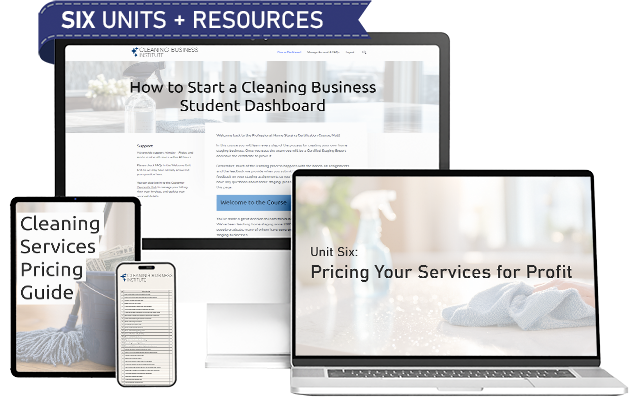
Several units of the Cleaning Business Institute course deal with what happens to a lead. Unit 6, Getting Your First Clients, includes scripts and templates for outreach, and Unit 3, Pricing Your Services for Profit, covers quoting and handling price objections. Both are in the Fundamentals Course.
Unit 8, Systems for Efficiency, covers scheduling tools and automated reminders and follow-ups, so fewer leads slip through stage four. It is part of the Fast Track Course. For what to actually say when you reach a prospect, see how to introduce your cleaning business.
Ready to get started?
Our step-by-step courses take you from where you are now to a credential you can show, with templates, an online exam, and a 30-day money-back guarantee.
See the courses